By Uziah Tusaasire
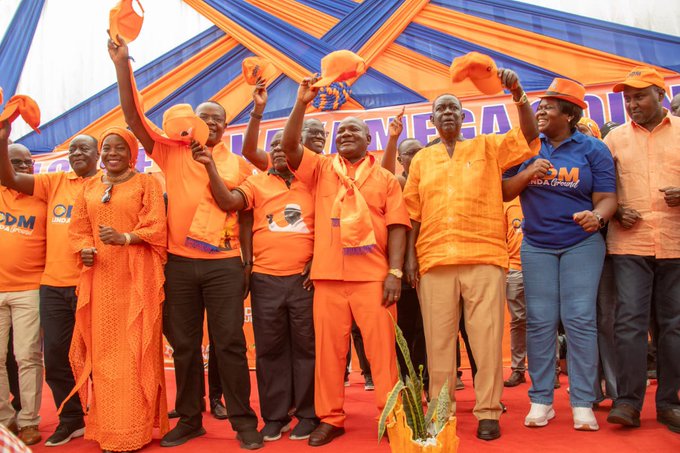
Kenya’s Orange Democratic Party (ODM), for decades the country’s most formidable opposition movement, is facing growing internal divisions following the death of its founder and long-time leader, Raila Amolo Odinga.
ODM’s identity was closely tied to Raila Odinga’s political influence and leadership. Before his death, Raila entered into a broad-based cooperation agreement with President William Ruto’s administration, a deal that saw several ODM leaders appointed to Cabinet positions.
However, the agreement did not clearly spell out whether it would be renewed or extended beyond its initial phase.
In recent months, sharp divisions have emerged within the party over the future of that cooperation. Raila Odinga’s brother, Oburu Oginga, has since taken a leading role in party affairs and, together with other allies, is pushing for the renewal of the agreement with the Ruto administration.
This stance has faced strong resistance from senior ODM figures. Party Secretary General and Nairobi Senator Edwin Sifuna, Siaya Governor James Orengo, Embakasi East MP Babu Owino, and Kisii Senator Richard Onyonka are among those who have openly opposed closer ties with the government. Some have warned they may break away from the party should the agreement be renewed.
Meanwhile, President William Ruto’s administration, which has faced criticism over corruption and alleged human rights abuses, is accused by critics of exploiting the divisions within ODM to weaken the opposition as he positions himself for a second term in office after 2027.
Ruto is also facing mounting political pressure from a growing opposition front that includes his former deputy Rigathi Gachagua, Wiper leader Kalonzo Musyoka, former Interior Minister Fred Matiang’i, and former Justice Minister Martha Karua. Political observers say this coalition could pose a serious challenge to his re-election bid.
The widening rift has raised fundamental questions about ODM’s future without Raila Odinga’s unifying presence. Many Kenyans are now asking whether the party can remain a cohesive political force or whether it risks fragmentation amid deepening internal disagreements.
On another front, former President Uhuru Kenyatta has recently attracted renewed attention from young Kenyans, popularly known as Gen-Z. Some of them are reportedly planning a march to his rural home in Gatundu to apologise for previously criticising him, saying they now believe he was unfairly blamed for failures they no longer associate with his administration. Many within the group argue that Kenyatta’s leadership compares favourably to the current government.
The writer is a Ugandan journalist and Chief News Editor at CroozeFM.