By Ivan Mugisha
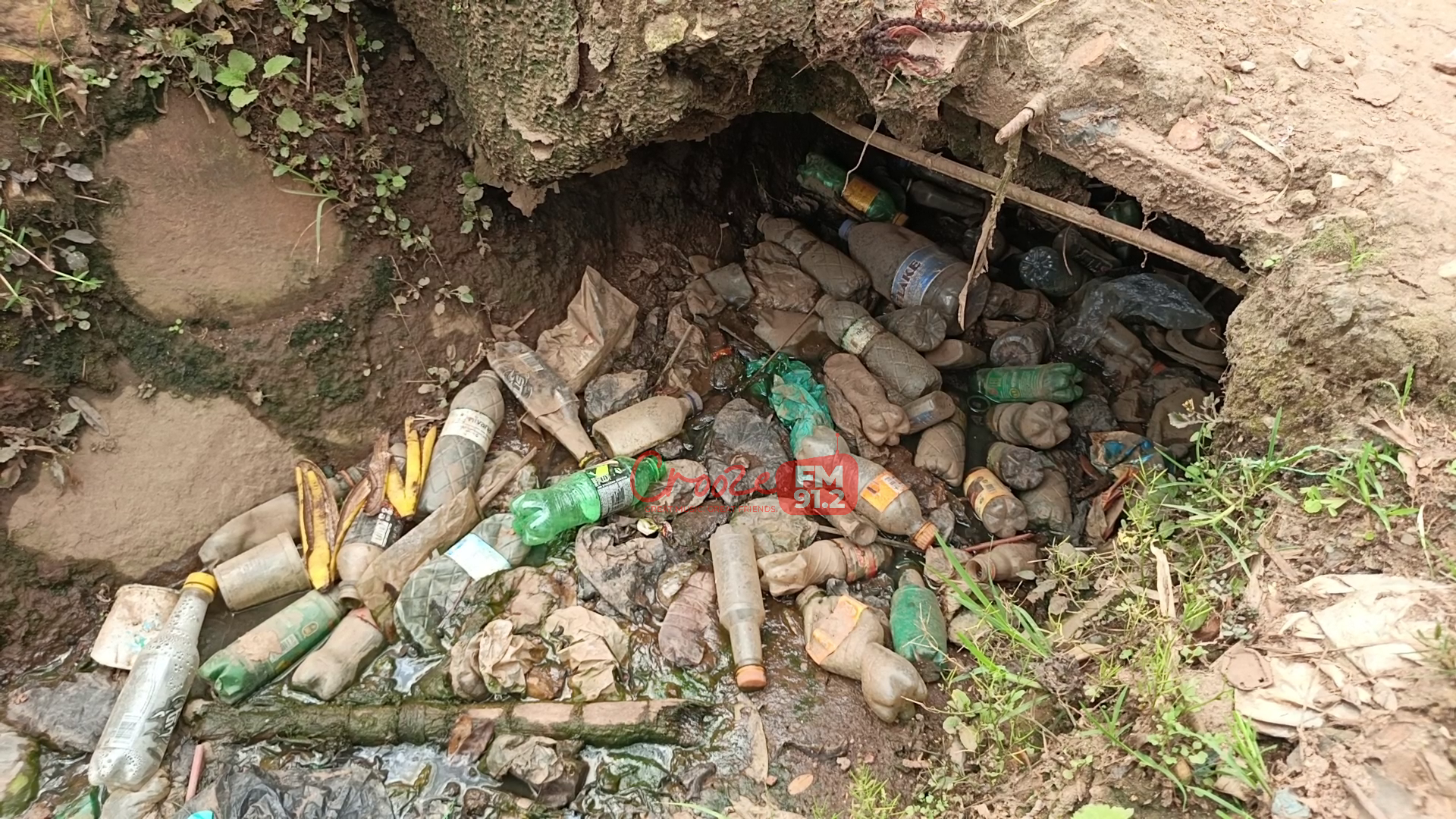
Environmentalists in the Rwenzori region have raised concern over poor solid waste management, particularly the increasing disposal of plastic waste, warning that it poses a serious threat to the environment and public health.
Officials from the Albertine Water Management Zone under the Ministry of Water and Environment say plastic pollution remains a major challenge in towns and trading centres across the region, despite ongoing environmental awareness campaigns.
Speaking on the issue, Senior Sociologist at the Albertine Water Management Zone, Samuel Tusiime Tinkasimire, said plastic bottles and other non-biodegradable waste are increasingly being dumped around bars, shops, and public spaces.
Tinkasimire warned that poor waste disposal practices are contributing to environmental degradation and called on local governments to strengthen waste management systems. He also appealed to development partners and environmental stakeholders to intensify community sensitization on proper disposal and recycling.
According to the 2024 Uganda Bureau of Statistics report, more than 9.1 million households, representing about 91.6 percent of the population, dispose of solid waste improperly through burning or dumping in gardens, bushes, and pits. The report further indicates that only about 8 percent of Ugandans have access to basic waste collection services.
Environmentalists warn that failure to address plastic pollution could have long-term effects on water sources, soil fertility, biodiversity, and public health.