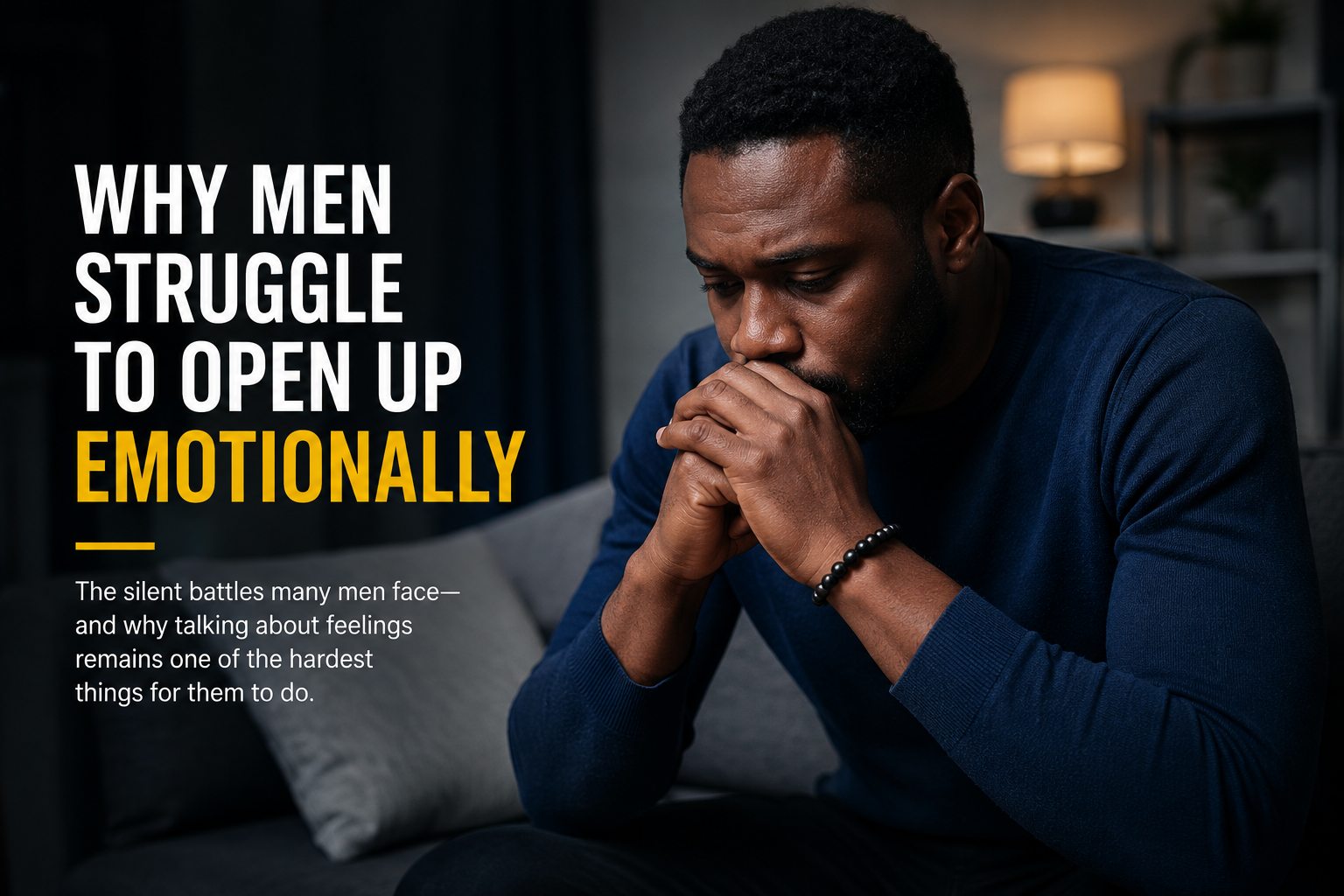
The silent battles many men face and why talking about feelings remains one of the hardest things for them to do.
We’ve all met that man. The one who is carrying the weight of the world on his shoulders but somehow keeps going. The one who shows up for work, provides for his family, jokes with his friends, and insists that everything is under control. Yet beneath the surface, he may be dealing with stress, disappointment, anxiety, grief, or self-doubt.
Ask him how he’s doing, and chances are you’ll get the same answer many men have mastered over the years: “I’m fine.” But is he really?
For generations, men have been expected to be strong. Not just physically strong, but emotionally strong too. Society often celebrates men who can endure hardship without complaint, solve problems without help, and keep moving forward no matter what life throws at them. While resilience is admirable, it can sometimes come at a cost. Many men grow up believing that expressing vulnerability is something they simply shouldn’t do.
From an early age, boys are often taught lessons that follow them into adulthood. “Be strong.” “Man up.” “Don’t cry.” Although these phrases may be spoken with good intentions, they send a powerful message: emotions should be controlled, hidden, or ignored. Over time, many boys learn that showing sadness, fear, or uncertainty can attract criticism or make them appear weak in the eyes of others.
As they grow older, these lessons become habits. A young man facing financial challenges may choose to suffer in silence rather than admit he is struggling. A husband dealing with emotional stress may keep it to himself because he doesn’t want to worry his partner. A father may believe he must always have the answers, even when he feels lost himself. The result is that many men become experts at hiding what they truly feel.
“Many men have learned how to carry pain. Few have been taught how to talk about it.”
The pressure doesn’t end there. Modern life has created even more expectations. Men are often measured by their ability to provide, succeed, and remain dependable regardless of the circumstances. Whether it’s paying bills, building a career, supporting a family, or meeting society’s definition of success, the pressure can feel relentless. When things don’t go according to plan, some men begin to question their worth.
And yet, even during those difficult moments, opening up can feel risky. What if people judge them? What if friends dismiss their concerns? What if vulnerability is mistaken for weakness? These fears are more common than many people realise.
The irony is that while men are often encouraged to be leaders and protectors, very few are taught how to process difficult emotions in healthy ways. Instead, feelings are bottled up, buried beneath busy schedules, long workdays, and countless distractions. Unfortunately, emotions rarely disappear simply because they are ignored. Sometimes they show up as anger. Sometimes they appear as withdrawal. Sometimes they damage relationships.
And sometimes they quietly affect a man’s mental health without anyone noticing. This is one reason many partners become frustrated. They want communication, connection, and honesty. The man, on the other hand, may believe he is protecting the relationship by keeping his struggles private. Both people care deeply, yet they find themselves speaking completely different emotional languages.
The good news is that the conversation is changing. More men are beginning to speak openly about mental health. More workplaces are recognising the importance of emotional well-being. More families are encouraging honest conversations about stress, anxiety, and personal challenges. Slowly but surely, the idea that men must suffer in silence is being challenged.
That doesn’t mean every man will suddenly become comfortable sharing his feelings. Trust takes time. Vulnerability takes courage. And changing years of conditioning doesn’t happen overnight. But perhaps progress begins with something simple: creating spaces where men feel heard rather than judged.
“Being emotionally honest doesn’t make a man less of a man. It reminds us that he is human.”
The next time a man says he’s fine, it may be worth asking a second time. Not because he owes anyone an explanation, but because sometimes the people who appear strongest are carrying the heaviest burdens.
Men are not born emotionally closed off. Many simply grow up in environments that teach them to hide what they feel. As society continues to rethink conversations around mental health, perhaps one of the most important lessons we can teach boys and men is that strength and vulnerability are not opposites.
In fact, some of the strongest conversations begin when someone finally feels safe enough to say, “Actually, I’m not okay.”