By Uziah Tusaasire
The Judiciary has announced revised security and media access guidelines ahead of the trial of opposition figure Dr. Kizza Besigye and two others at the Criminal Division of the High Court.
In a statement issued on July 29, 2026, the Judiciary said the measures are part of a wider security plan aimed at ensuring the trial proceeds in an orderly, secure and efficient manner while safeguarding the right to a fair and public hearing.
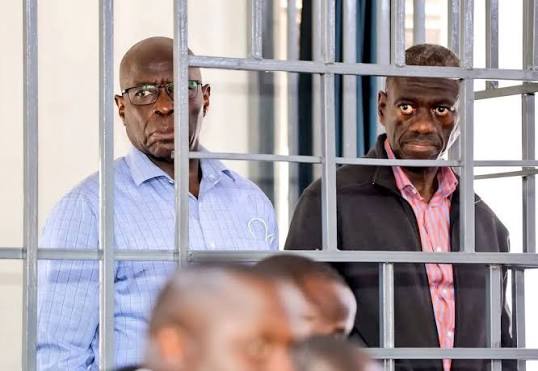
The trial involves Dr. Kizza Besigye, Hajji Obeid Lutale and Captain Denis Oola.
According to the new guidelines, access to the courtroom will be limited to selected court staff, the accused persons, state and defence lawyers, accredited journalists and members of the public, subject to available space.
Journalists intending to cover the proceedings will be required to obtain prior accreditation from the Judiciary’s Public Relations Office. The court has also reserved the right to limit the number of reporters allowed inside the courtroom depending on space availability.
The Judiciary said journalists will be required to submit gadgets, including cameras, audio recorders, laptops and other relevant equipment, for security screening before accessing the proceedings.
Requests for live broadcasts of court proceedings will be considered on a case-by-case basis through the Public Relations Office, while photography and videography inside the courtroom will remain restricted unless authorised by the court.
The use of mobile phones, tablets and other communication gadgets inside the courtroom will also not be permitted.
The Judiciary said the measures are intended to maintain security, orderly proceedings and continued public access to the hearing while preserving the integrity of the judicial process and the principle of open justice.
Dr. Kizza Besigye and his political aide, Hajj Obeid Lutale, were arrested on November 16, 2024, in Nairobi, Kenya. They were subsequently abducted and extradited to Uganda overnight without legal process.
They face severe capital offenses under Section 23(1)(c) of Uganda’s Penal Code Act, which carry a potential death sentence. Initially brought before a military court-martial, their files were transferred following a Supreme Court ruling, and they were formally charged in a civilian court on February 21, 2025
They are accused of Treason and misprision of treason