


By Aggrey Twesigye
Uganda is registering approximately 94 new HIV infections every day, with women accounting for 22,000 of the estimated 34,000 new infections annually, raising concerns over the country’s progress towards ending AIDS as a public health threat by 2030.
The figures were revealed by Jackie Makokha, the UNAIDS Country Director for Uganda and Tanzania, during the opening of the 5th National HIV and AIDS Symposium 2026 at Mbarara University of Science and Technology (MUST).
Makokha called for targeted interventions focusing on children, adolescent girls and young women, men and key populations, emphasising the need for stronger community-led services, reduced stigma, integrated healthcare and investment in locally driven research.
Dr Ruth Senyonyi, the chairperson board uganda AIDS Commission said the country has an estimated 1.5 million people living with HIV, with more than 1.4 million currently receiving treatment, according to the 2025 National HIV Estimates.
She attributed the continued spread of HIV to multiple sexual partners, gender-based violence, harmful social and cultural norms, early sexual engagement and widow inheritance, among other factors.
Meanwhile, MUST Vice Chancellor Professor Pauline Byakika-Kibwika called for stronger collaboration between researchers, universities, policymakers and communities to translate scientific evidence into practical interventions.
She proposed a costed national action agenda, clear financing milestones and an annual performance scorecard to strengthen accountability and track progress towards the 2030 target.
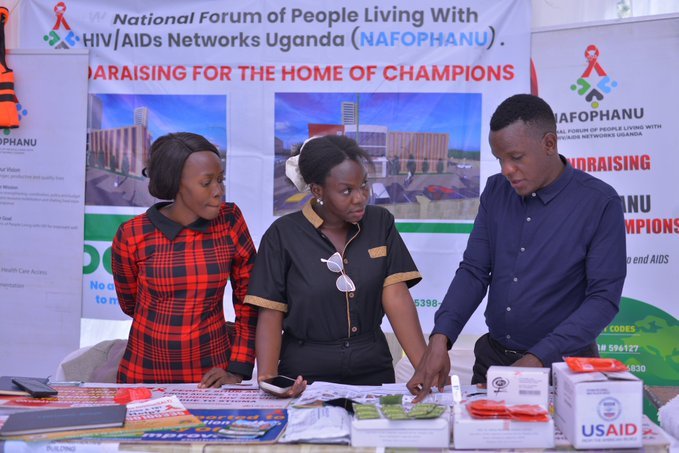
The three-day symposium, convened by the Uganda AIDS Commission and its partners, has brought together researchers, policymakers, political leaders, healthcare providers and community representatives to assess Uganda’s HIV response and explore sustainable interventions.
The symposium is being held under the theme: “Sustainable Interventions to End AIDS as a Public Health Threat by 2030.”

